What is Assertive Communication, and Why Does It Matter in Narcissism Recovery?

If you have a person with narcissistic traits in your life, you communicate with them. Maybe you're low contact, and communication is rare. Maybe you've realized that communicating only by text or email, where there's a paper trail, is safest. Or maybe you live with them, and you communicate many times a day.
Regardless of the type or frequency of communication, if you're talking, emailing, or texting someone with narcissistic traits, assertive communication is your best friend. Why? Assertive communication offers you a number of benefits.
One, assertive communication doesn't grant you magical powers. However, it does make it more likely that the person receiving your message will stay calm.
Two, as we'll see, assertive communication is calm and respectful. If your communication is written, and it finds its way to a courtroom, you'll be glad you communicated calmly and respectfully!
Third, and in my opinion, most importantly, assertive communication helps you stay calm while you're communicating. Your body will thank you for staying calm, rather than becoming angry or irritable.
So, today we'll talk about what assertive communication is, and why it matters in narcissism recovery. To understand assertive communication, it's helpful to understand all of the ways you can communicate. Let's take a look!
Aggressive Communication
Aggressive communication is when you care about how you think and feel, without respect for the other person. Imagine that your partner asks you to pick up milk from the store on their way home from work so you can make dinner. If you answer aggressively, you might yell at your partner, tell them they shouldn't have forgotten milk when they went shopping, or tell them you don't care about their problems, and they can get their own milk.
Tipoffs that you're using aggressive communication, or you're on the receiving end of it, include the use of increased voice volume, a sarcastic or mean tone of voice, and the use of profanity or labels. These tools show disrespect for the other person, and are intended to bully the recipient.
Passive Communication
Passive communication is on the other end of the spectrum – you care about how the other person is thinking and feeling, without respect for you. An example would be your partner asking you to pick up milk on your way home after a 12-hour shift, although they’re going to be home all day and don’t have plans. Instead of suggesting your partner make a run to the store while you’re at work, you agree to stop by the store, without regard for how tired you’re feeling.
If you're a passive communicator, you may be thinking that if you're nice, your person with narcissistic traits will be nice in return. Or, you may think it's safer to just give in than to speak up. Regardless, chances are good you rarely get your needs met.
Passive-Aggressive Communication
Passive-aggressive communication is when a person is acting as though they care about you, when in fact they are only concerned about themselves. An example of passive-aggressive communication is using “I forgot” without an apology and making it right. For example, you ask your partner to stop by the store to pick up milk on their way home from work, so you can make dinner. Your partner agrees, but when they get home, they don’t have milk, and tell you, “Oh, I forgot to stop by the store.” Instead of apologizing and offering to go to the store, your partner gets defensive and says, “Well, why didn’t you go to the store today? I had to go to work, and all you did was stay home with the kids!”
Your partner is engaging in passive-aggressive communication, because when they agreed to pick up the milk, they acted as though they cared about you. But when your partner became defensive instead of apologizing, and didn’t offer to run to the store for milk to make it right, they made it clear that they care about themselves, without concern for you.
If you're on the wrong end of passive-aggressive communication, you can probably relate to the expression "death by 10,000 paper cuts." Passive-aggressive communication is a hallmark of what's often called covert narcissism. It's harder to say that a partner who forgot to pick up milk is abusive or neglectful than it is to say it about a partner who screamed profanities at you when you asked them to pick up milk. Nevertheless, it's an abusive, neglectful way to communicate.
Assertive Communication
Assertive communication strikes a balance between caring about how you think and feel, and respecting how the other person thinks and feels. So, an example would be asking your partner to stop by the store and get milk on their way home. Your partner says they'd like to help you, but they won’t have time to take care of a phone call they need to make. You offer to make a phone call during the day so they won’t need to, and your partner picks up the milk for you on their way home.
Assertive communication is the only healthy way to communicate, because it's the only way that takes both people into consideration. It's the only communication style that focuses on staying calm and being respectful of both parties. It's grounded in teamwork--working together to ensure that as many people get as many wants and needs met as possible!
What If I'm Not Assertive?
Whether you’re a moving toward, moving against, or moving away personality type, you weren’t born with assertive communication skills. Moving against types tend to care more about how they think and feel than about others, so they tend to be more aggressive or passive-aggressive.
Moving away types tend to detach from feelings, both their own and others, and their responses tend to be passive or passive-aggressive. That said, moving aways can be passive until they suddenly and unexpectedly become aggressive!
Moving toward types struggle with assertive communication because they want to like others, and want others to like them. Like moving away types, this makes it hard for moving toward types to express their own thoughts and feelings. They tend to be more passive until they get frustrated, then swing to passive-aggressive or aggressive communication.
If you want to be more assertive, awareness is the first step. Noticing how you're currently communicating will help you decide what's working, and what to change.
If you’ve been working on keeping your drawbridge at a 45-degree angle, and you’re noticing what others say, you’re working toward assertive communication. What others say is how they think and feel. Deciding whether you think what others say is true and helpful is how you think and feel. Putting the two of these together – noticing what others think and feel, and balancing that with how you think and feel – is foundational to assertive communication.
Knowing the difference between aggressive, passive, passive-aggressive, and assertive communication, and knowing your tendency to be passive, aggressive, or passive-aggressive, gives you the "who, what, and why" of assertive communication. Next week we'll take a look at the "how" of assertive communication, which will help you turn the spinner to you.
Until then, I encourage you to continue working on keeping your drawbridge up at a 45-degree angle, notice what others say, and apply the true-helpful test. Then, notice how you think and feel about telling others how you think and feel, and what you want and need. That's where we'll pick up next week!
Like what you're reading?
Subscribe to become a site member and get email notifications for new posts,
scroll down to leave a comment or a rating,
or click on the three dots at the top of the page to share with a friend!
If you click on the links in this post and make a purchase, I earn a small finder's fee on qualifying purchases as an Amazon Associate, at no cost to you.
This website is for educational purposes only. It is not intended to be a substitute
for or to replace working with a doctor, therapist, or any other care provider.
I assume no responsibility for errors, inaccuracies, omissions, or other
inconsistencies, and disclaim any liability to any party for any events,
including but not limited to loss, damage, or disruption, whether loss,
damage, or disruptions results from negligence, accident, or any other cause.
Your use of the information on this website is at your own risk.
1
Searing the Beef
Sear beef fillets on high heat for 2 minutes per side to form a golden crust. Let it cool before proceeding to keep the beef tender.
1
Searing the Beef
Sear beef fillets on high heat for 2 minutes per side to form a golden crust. Let it cool before proceeding to keep the beef tender.
1
Searing the Beef
Sear beef fillets on high heat for 2 minutes per side to form a golden crust. Let it cool before proceeding to keep the beef tender.
1
Searing the Beef
Sear beef fillets on high heat for 2 minutes per side to form a golden crust. Let it cool before proceeding to keep the beef tender.
Notes


1
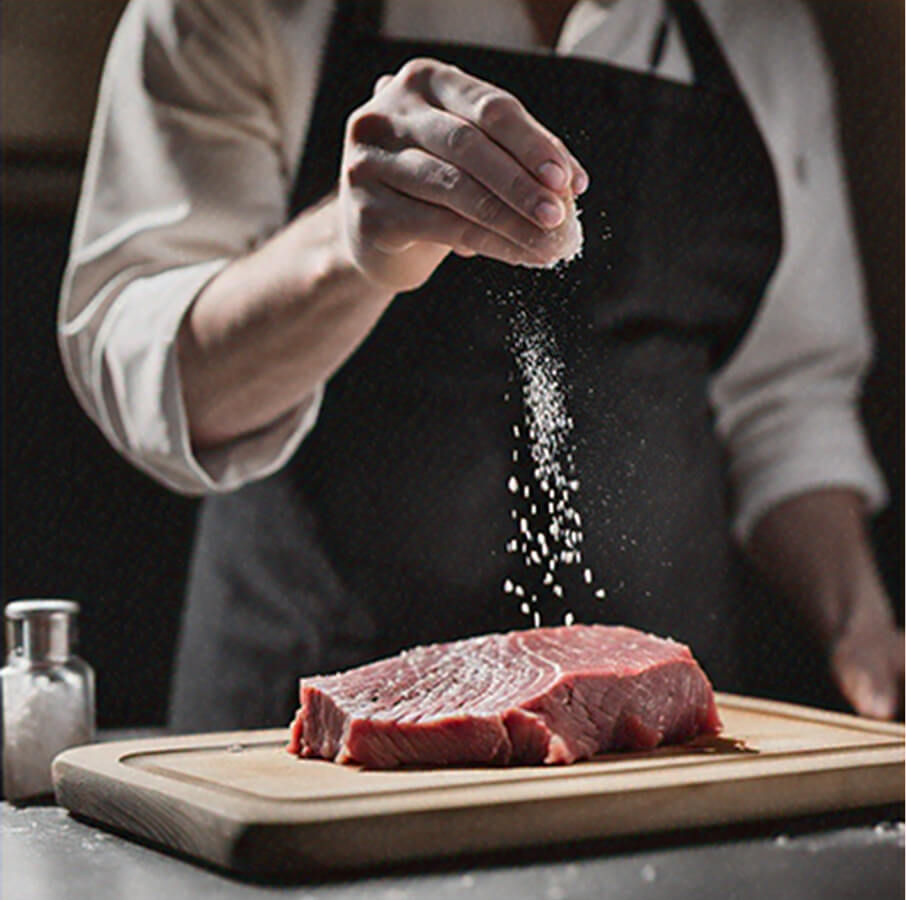
Season the good fresh beef fillets with salt and black pepper. Heat olive oil in a pan over high heat and sear the fillets for 2 minutes per side until it fully browned. Remove the beef from the pan and brush with a thin layer of mustard. Let it cool.
1
Season the good fresh beef fillets with salt and black pepper. Heat olive oil in a pan over high heat and sear the fillets for 2 minutes per side until it fully browned. Remove the beef from the pan and brush with a thin layer of mustard. Let it cool.
1
Season the good fresh beef fillets with salt and black pepper. Heat olive oil in a pan over high heat and sear the fillets for 2 minutes per side until it fully browned. Remove the beef from the pan and brush with a thin layer of mustard. Let it cool.
1
Season the good fresh beef fillets with salt and black pepper. Heat olive oil in a pan over high heat and sear the fillets for 2 minutes per side until it fully browned. Remove the beef from the pan and brush with a thin layer of mustard. Let it cool.
Instructions
Quality Fresh 2 beef fillets ( approximately 14 ounces each )
Quality Fresh 2 beef fillets ( approximately 14 ounces each )
Quality Fresh 2 beef fillets ( approximately 14 ounces each )
Beef Wellington

Beef Wellington
Fusion Wizard - Rooftop Eatery in Tokyo
Author Name

Beef Wellington is a luxurious dish featuring tender beef fillet coated with a flavorful mushroom duxelles and wrapped in a golden, flaky puff pastry. Perfect for special occasions, this recipe combines rich flavors and impressive presentation, making it the ultimate centerpiece for any celebration.
Servings :
4 Servings
Calories:
813 calories / Serve
Prep Time
30 mins
Prep Time
30 mins
Prep Time
30 mins
Prep Time
30 mins


Comments